
A Midwinter’s Eve Honoring
Moments in the Flow…Connecting the Solstice to the Divine Mother Energy

Hello again,
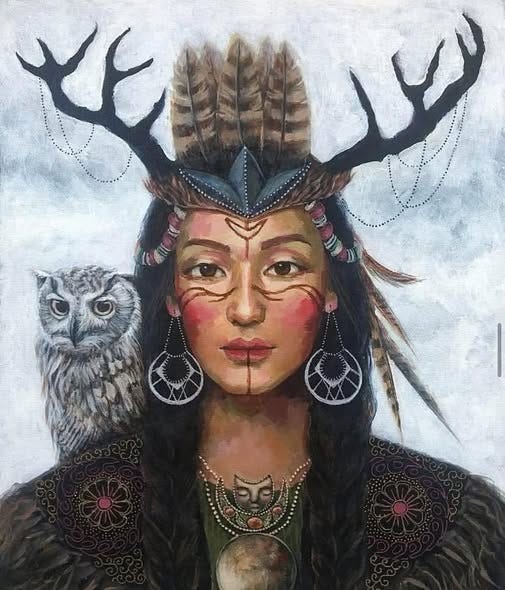
I was caught by surprise when reading an article posted on Facebook this week. The beautiful artwork for the post drew me in and I found the information given makes so much sense. It might be known to others, but for me it was something I don’t remember seeing before.
Midsummer’s Eve is famous (thanks Shakespeare!) and thought of as a Fairy Festival, but not much was said about the Eve before Midwinter. Christmas Eve on December 24th has been the most well-known night of observance during this season, and I do find it carries a gentle, spiritual, angelic energy that I enjoy.
But the Facebook post by David Halpin on Circle Stories* shared some facts about the ancient (and for some, current) celebration of Midwinter’s Eve.
“An ancient winter festival which stems from at least the Iron Age is Mothers Night or Modraniht**.
This celebration took place on solstice eve and was associated with honouring female ancestors and spirits, hence the association with mothers. What may be surprising to some is that this celebration is also echoed in some Irish Christmas Eve folklore.
Unlike other less attested feasts which took place at this time, we have definitive written documentation of this celebration going back to the 8th century, and relics of these same deities in the form of the Dísir and Matres from the first century.”*
Midwinter and Christmas
Midwinter has always been. But the connection between these two occurrences has to do with the Roman Church council choosing this festival time as the time to celebrate the unknown birthday of Jesus.
Why did they do that?
The designation of December 25th as the day to celebrate is said to have occurred in the 4th century, as a decision of Roman Emperor Constantine. This came just after the ‘sol-stice’ (sun standing still at a point on the horizon) and was the day the sun began to move to the north and light began to increase again in the northern hemisphere. Some believe it also provided competition for the current ‘pagan’ festivals at this time.
The Great Mother Goddess
The Romans also knew the connection the northern people had to the Great Mother Goddess. The Bible story of pregnant Mary riding a donkey to Bethlehem where Joseph had to register himself in a Roman-decreed census resonates with their myths though it has a significant difference from the “Modraniht.”
We see this difference through one depiction in a tale of this time known in Wales and elsewhere.
In the Celtic tale the time of longest nights was seen as a time accompanied by dark energies culminating at the Solstice, the three days when the sun didn’t move and the fearful ‘wild hunt’ took place. The passage of the Sun through this time was envisioned in the story of a Fertility Goddess who represents the return of the light and the new agricultural year.
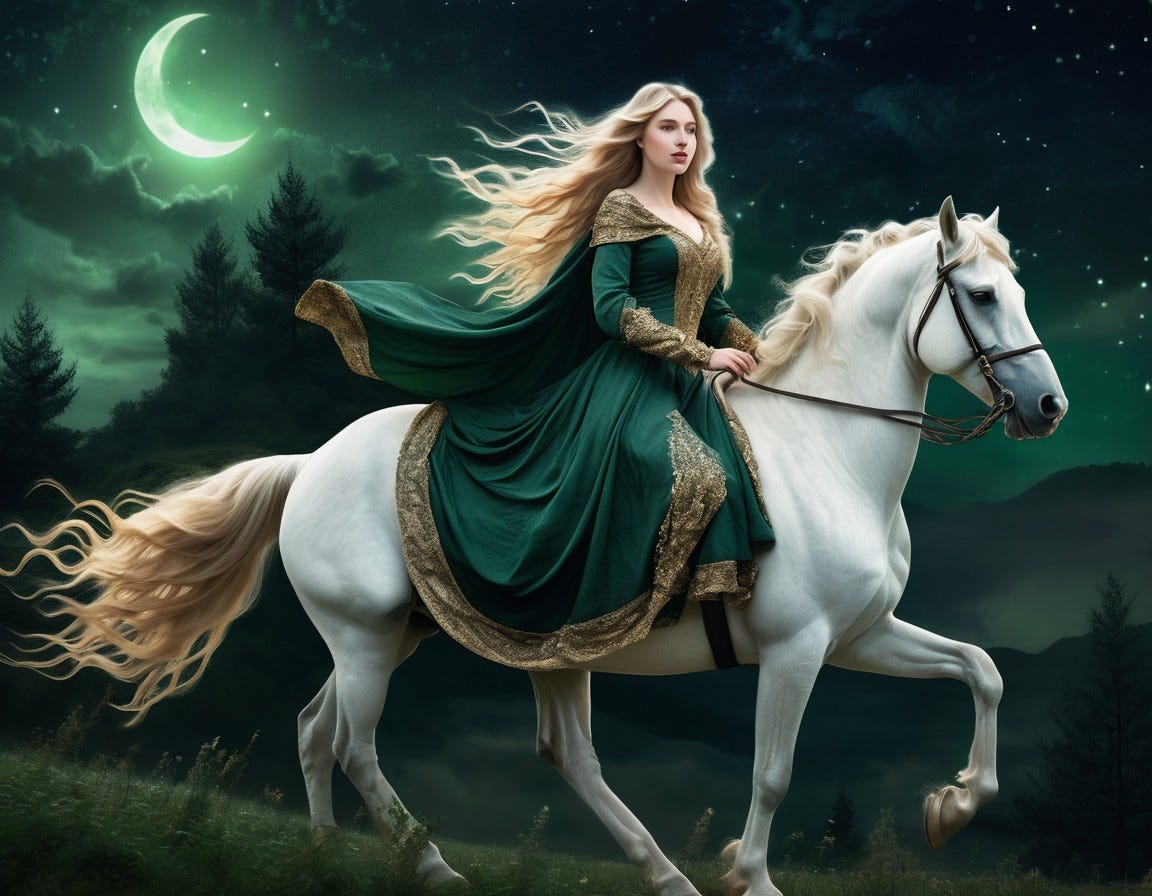
She is either pregnant or holding a newborn and riding a white horse through the woods**, trying to escape the pursuing hounds of the underworld. If she arrives on the other side of the woods, she is safe to give birth or take the infant to a safe place where he can grow.
Because of this, the Mother’s Night on Midwinter Eve would be a time to meditate on the safe passage of this fertility goddess and for blessings in the new Solar Cycle, but also perhaps have a “moment of personal closeness and reflection for families, daughters and sons” and “a time to remember the mothers who had passed on, and as the dark nights reached their end and the new light was about to be born it was the moment of contact between endings and new beginnings.”*
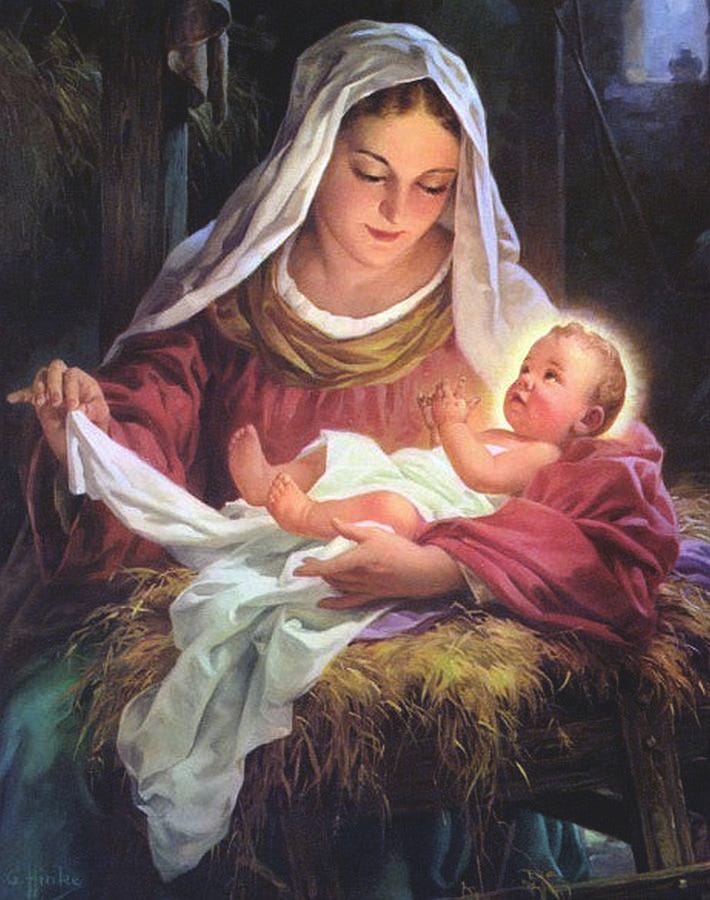
A few days later, Christmas Eve certainly brings its focus to Mother Mary and the hard sought safe space finally found for her to give birth to the Divine Child. Mary was given the title ‘Mother of God’ and achieved Divine status in the council of Ephesus in 431 AD. The idea of Immaculate Conception is discussed in my post Mother Mary’s Secret.
Another Goddess on a White Horse
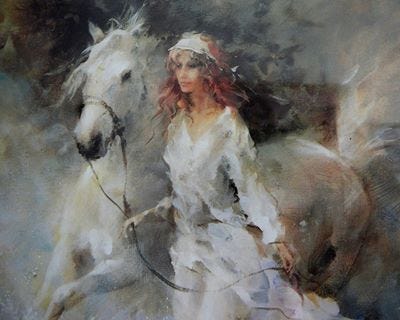
One of the Welsh myths tells the story of Rhiannon and it begins with a man who would be king, seeing the vision of a beautiful woman, riding a white horse through the woods. Though he tries to catch up with her, he can never overtake her. But one day she comes up to him and declares her love.
Originally, with no knowledge of this myth, I wrote a long, rhyming poem called Rhiannon’s Dance. In my post, A Year of Bardic Downloads, I tell the story of how this poem came through me at a time when the only Rhiannon I knew of was in the song by Stevie Nicks. I didn’t know she was referring to a Welsh Goddess.
Decades later, studying Welsh myths while writing the Revealing the Druid Legacy series, I discovered this poem held information that was a match for the myth. And a decade after that, I realized how Patriarchy had influenced her story.
So, I have pondered this myth, and my poem that includes the stanza in her song where she says, “You bathe me in beauty then punish with pain. Before you I’m naked, my spirit is humble, I choose to forgive you again and again.”
Who should punish a Goddess? Why does love include submission and pain? I have pondered a retelling of her story, as I did for Ceridwen, keeper of the Cauldron. That one was so well-received and had many viewers. It seems we may be ready to return this Sovereignty Goddess to her power, too.
If Rhiannon’s story comes to me, you’ll be the first to know. And meanwhile, I will be honoring ‘the Mother’ on Midwinter Solstice Eve. This year, that is Saturday, December 20th.
See you next time!
(C.) David Halpin.
Image Credit: Annie Hamman
** In The Last Priestess, set in the late 5th and early 6th centuries in Wales, Anwen tells us that she is called to serve ‘the Great Goddess Modron.’
***Earliest depictions are of a far northern Goddess, Elen of the Ways. They show her riding a white reindeer (and at this time of year, it would be a female deer or reindeer because they still have their antlers). This idea suggests that the earliest story of someone riding a reindeer-pulled chariot in the sky, dispensing gifts to the land and the people, may have originated with a Goddess instead of the modern image of Santa Claus.
Spot on:) the goddess, however, is Elen of the Ways:) slight mistype)