
To Tell the Truth
Moments in the Flow: Miriam’s Story

Hello again,
After I posted To Be Heard, Liberating the Female Voice I’ve noticed articles on Substack and other platforms written by women intent on giving a voice to historical, mythological and biblical characters who appear with only one version of their story. What we may be most familiar with is the story told after Patriarchy gained control of our consensus beliefs.
I was liberating the voice of a Druid Priestess from the 5th Century CE when I wrote the Revealing the Druid Legacy series. In her introduction, Anwen says she could not have spoken before now because “…the veil over truth became so thick that had I tried to speak, my words would have ricocheted off dense walls of fear or been buried in the quicksand of despair. And so, this tale has been kept carefully cloaked in silence along with other truths about our time, sacred sites and ways.”
There are more veils to lift, including those that involve women in the Hebrew and Christian tales. Today I’m exploring one of them in the story of Miriam.
What’s In A Name?
A brief post in Feminism and Religion, Miriam Is For the Girls by Zoe Carlin, got me thinking about the woman whose name is familiar from my upbringing. However, I thought she must have had a minor role, because I couldn’t remember her story, or even where she appears in the Bible. I had only a vague idea that it was early on.
Because hers is not a name that beings with the familiar ‘Mar’ I was curious about the meaning of the name beginning ‘Mir’. In my search, I found many seemingly conflicting ideas, like both ‘bitter’ and ‘sweet.’ Then I noticed this video of a Rabbi in the search results. I decided to hear what he had to say.
Since I did not grow up in the Jewish religion, I’ve never heard a Rabbi teach and I have to say this was a remarkable experience. He defined the words of the Hebrew language to get to the essence of the name Miriam. In doing this, he also explained more about her story than the lighter, ‘cliff notes’ versions my search had provided.
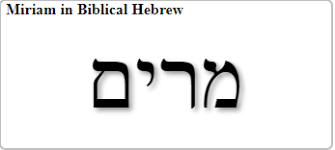
Miriam appears in Exodus, a time of bitterness for the Jews while they are slaves in Egypt. She was a prophetess, who will be instrumental in the birth of Moses.
In this time the Pharoah had mandated all Jewish boys should be killed at birth by placing them in the Nile. Miriam’s father was the leader of the Jews, and he told his people to adopt celibacy so they would not have to face the grief and suffering of killing their sons.
But Miriam had a vision. And she makes a reasonable argument, telling her father that if they can have no sons, they can also have no daughters which means no children will be born to the Jews.
While he considers this she tells him of her vision that he will be the father of a son who will be the Redeemer of the Jews and lead them out of the Pharoah’s control to find ‘the promised land’. Of course, this was the persuasive point that made her father rescind the restriction on marital relations.
(In my opinion, Miriam, who cleared the way for the birth of Moses, has her own role in the liberation of the Jews.)
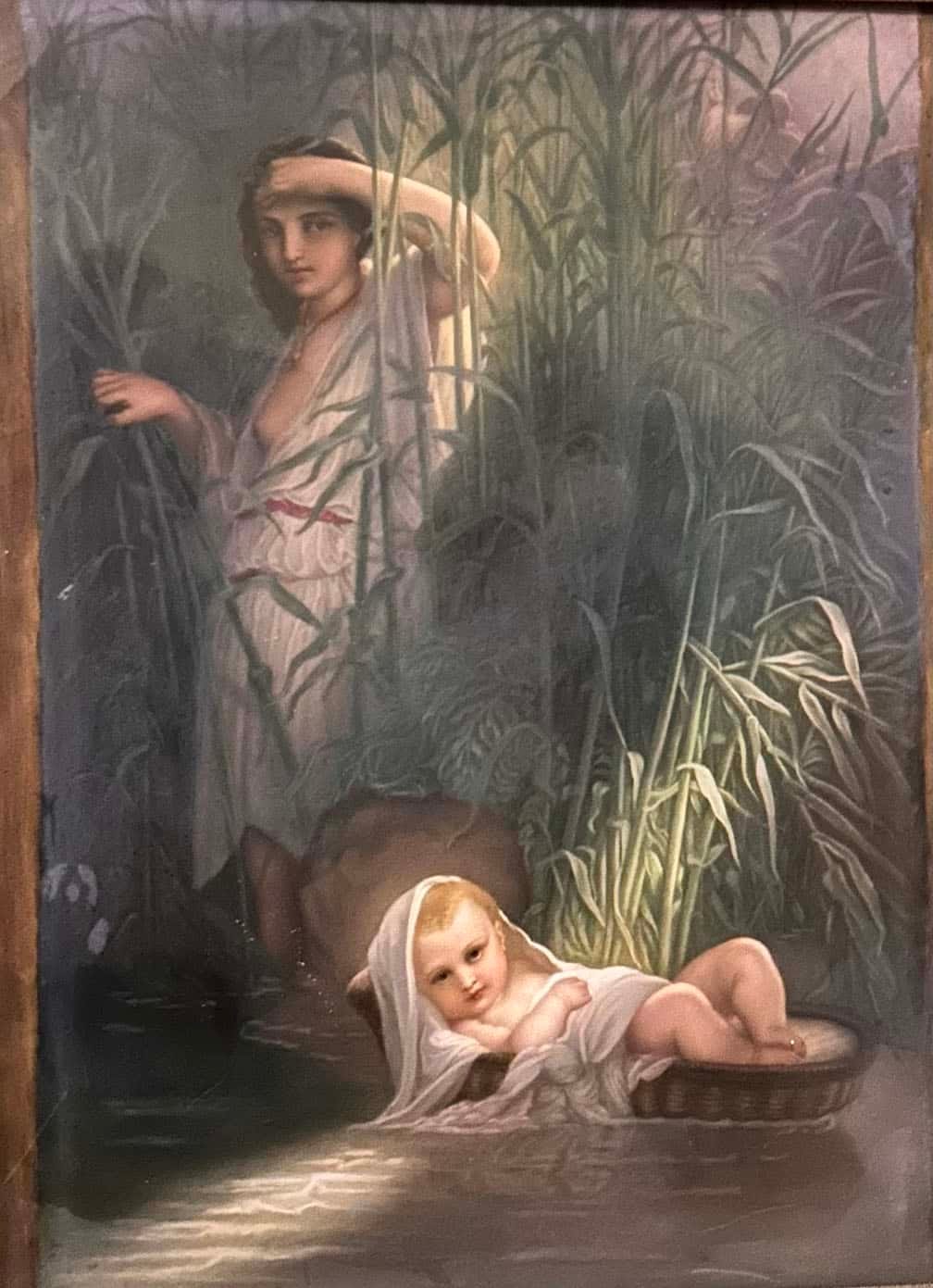
Moses is born and they know they cannot keep him at home, so her mother tells Miriam to bring Moses in a tightly woven basket and place him in the Nile, in the current but not far from the shoreline. She did this and followed the basket as it moved down the river until it reached the bullrushes where the Pharoah’s daughter came to be converted.
Here we see Miriam as a guardian, making sure Moses arrives safely into the hands of the Pharoah’s daughter who; despite knowing he was a Jew, wanted to raise him as her child.
The Rabbi says Miriam means ‘enough rain to create an ocean’, which contains bitter water. But Miriam, the sister who ensured the Redeemer’s birth and life with the Pharoah’s daughter, turns the bitter water to sweetness when he leads the people out of Egypt. On their journey, Miriam will take part in keeping up the positive morale, playing her tambourine and leading the people in song and dancing.
Rejection and Punishment
It is later in her story when the aspect of bitterness and rebellion will be found, and it is here that we begin to see the issues negating a woman’s voice and her place as a source of spiritual power. In fact, it will be seen as a cautionary tale. Another brick in the wall of the Patriarchy.
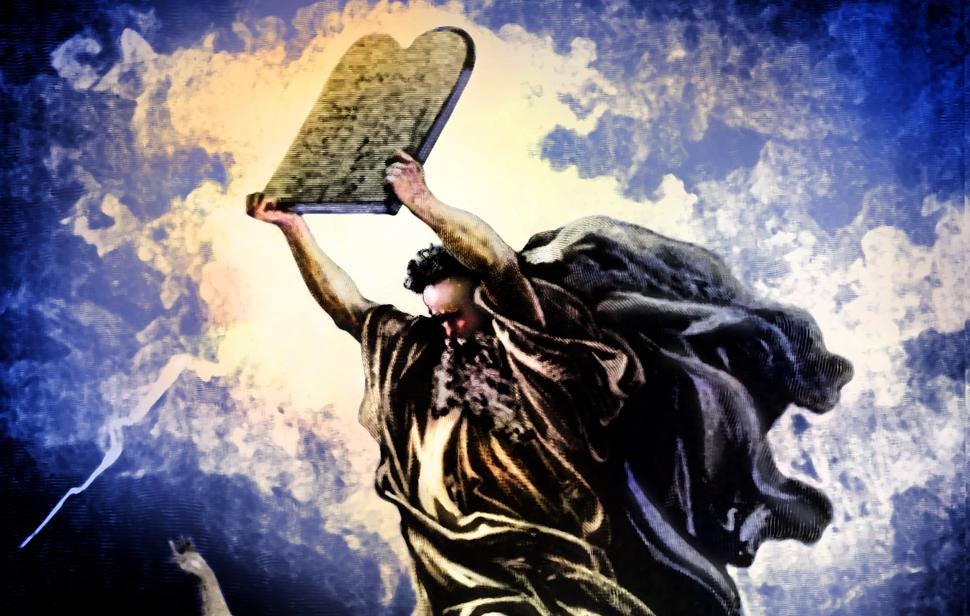
This story comes after Moses receives the tablets and returns to find an unruly, rebellious group. Miriam and her brother Aaron have been trying to deal with this but are without authority. They question Moses about his leadership when he marries an Ethiopian woman of a different race and faith. They both feel they should be able to be leaders, too. But Moses resists, asserting that God only speaks to him. But they argue, why shouldn’t he speak to us, too?
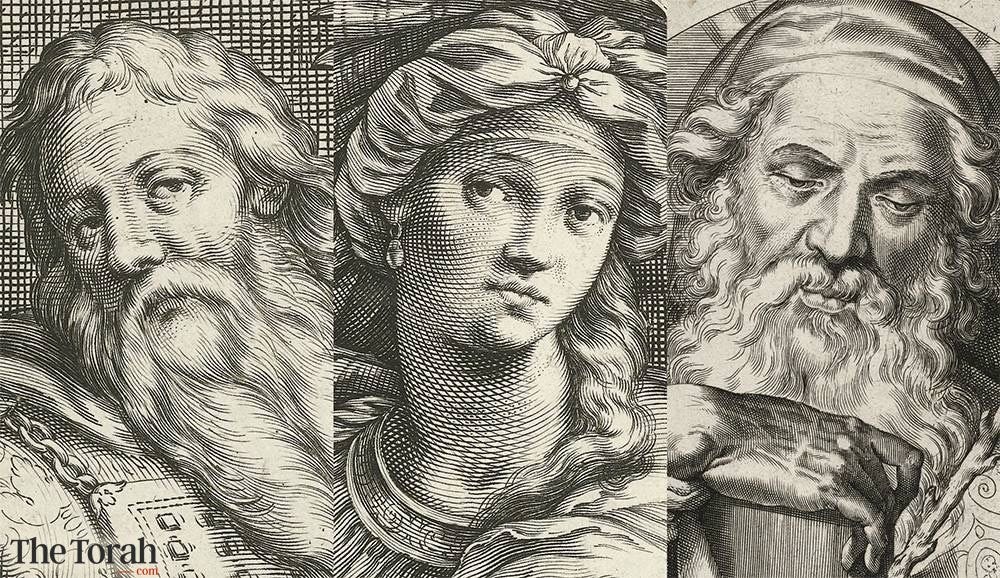
This is the place in the tale that, for me, reality vanishes. I have a hard time with the fact that God shows up at the tent where the three siblings are meeting. God defends Moses, for his unique role and faithfulness.
And then God punishes Miriam for slandering Moses by giving her leprosy for which she is banished from the tribe. Here we see that punishment is only for the female sibling who claimed an equal ability to hear the voice of God and her right to be a spiritual leader.
Aaron intercedes on her behalf, and her banishment is dropped to seven days. One is left to assume her leprosy vanished.
Miriam’s story is taught as a cautionary tale about what happens if you question a representative of the Divine.
Miriam Stories in Our Lives
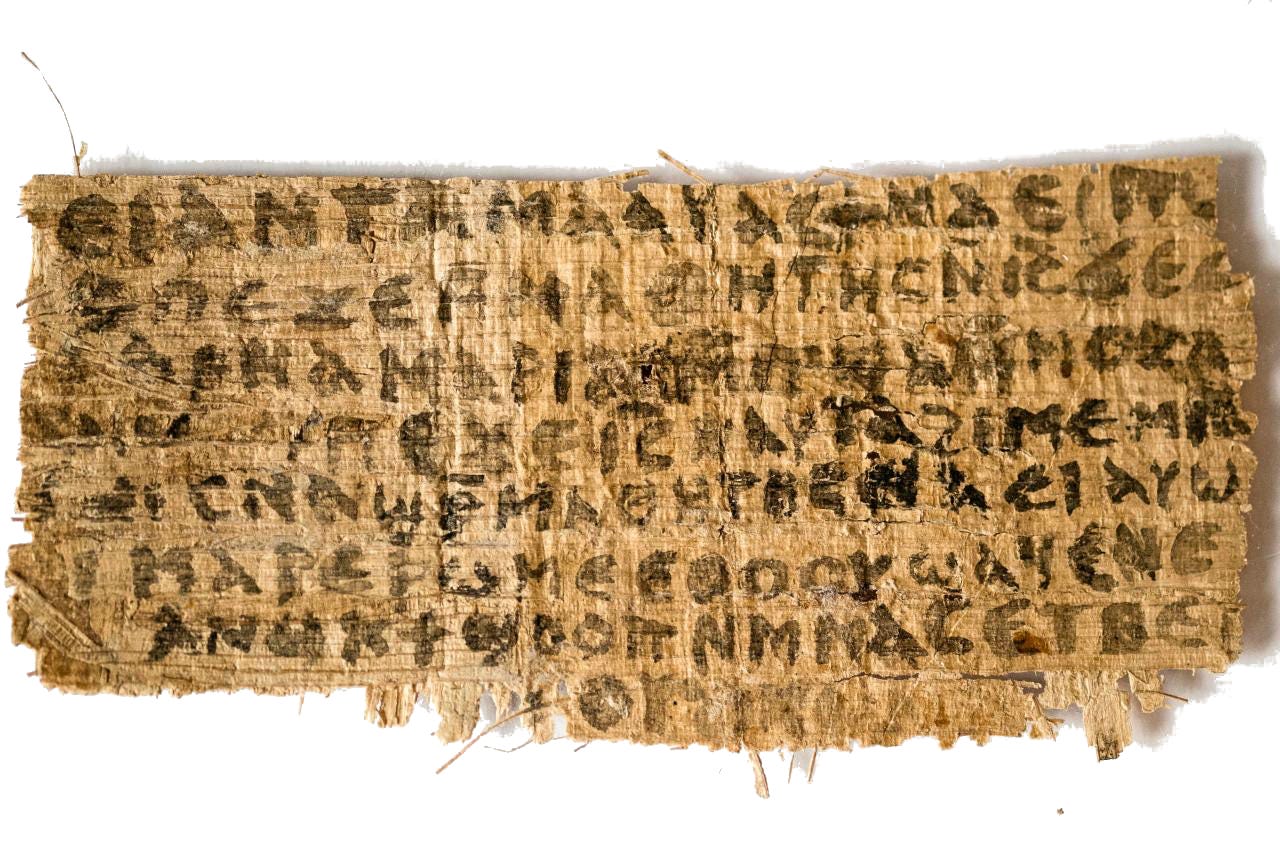
Obviously, this story gives ammunition to the Churches who don’t want to accept a female priest. And it may have supported the decision to leave the relationship with Jesus and the gospel of Mary Magdalene out of the New Testament.
Non-sectarian groups like the one founded by equal partners Charles and Myrtle Fillmore (Unity) and smaller groups of their own denomination might be open to females as a spiritual leader. Finally, the Episcopalians admitted women into the Priesthood. Still, I recently heard from a female Episcopalian Priest that it took a long time for her to achieve this.
One of my own Miriam moments involves a time when I was on the Board of what is thought to be a more liberal Church.
Of course, I was given the female role of taking minutes for the room full of men. One day, they were discussing how to pave the way for a Board member to remain without having to run for office again. For his comfort they wanted to override the rules of the system and act without integrity.
I knew the congregation well, and that many would remember the vote only a year ago. Gossip would spread about why this person wasn’t running again. A toxic atmosphere would bloom. So, I mentioned this, and that they might be seen as ‘good old boy’s’ if they did this.
That lit a fuse and they angrily protested. I explained I hadn’t said they were that, but some would see it that way if they went through with their idea. I added I was sure that people liked the person well enough to reelect him for a longer term.
I can tell you God didn’t show up to support them and punish me, but I received an email from the Minister asking me to meet him in his office that week. There, I was told I was never to say anything that would upset the men on the Board again.

Before this, I was aware of the tendency for Ministers to be mindful of those who gave the most money and the need to keep them happy. I was reprimanded for igniting those fears and this was acceptable because I was a woman and when I told the truth, it was said with a woman’s voice.
A few weeks later, I resigned. And I found that I had lost respect for the Minister and couldn’t listen to his Sunday messages of love and inclusion. I left the Church. In the end, I was told by a friend that the person ran for election and achieved his goal.
Miriam’s Well

I’m not sure if we are told how Miriam dealt with her feelings after her punishment. But we know that when she died the ‘magical well’ that followed her around dried up.
For some reason, the people did not mourn Miriam. But they began to quarrel with Moses and Aaron about lack of water.
I thought Miriam’s ‘traveling well’ might be a metaphor. It reminds me of the Celtic goddess, Ceridwen, the keeper of the Cauldron which is the source of Inspiration from the Otherworld.
Perhaps Miriam, the prophetess, was a wellspring of inspiration that was not recognized with appreciation. After her un-mourned death, this inspiration was gone.
Do You Have Miriam Stories?
As a woman who communicates, I have other Miriam stories in my life…do you have any in yours? I’d love to hear them.
And I welcome any comments or stories from my male readers and subscribers. I’m grateful for you all.
I believe rexamining of the old tales and seeing them in a new light is important for us now. Negative beliefs that have been transmitted often stay in our uncounscious mind, holding us back from our full self-expresion. Understanding this and reframing the image may allow women to regain more of their self-worth and personal power.
And I am optimistic that despite what appears to be a backsliding in women’s rights in the US, the day will come when equality of male and female will be restored. With this partnership we can return to the awareness that we are not superior to other parts of creation but are in relationship with all things.
This is a step on the way to creating the ‘better world’ we desire.
See you next time!
Dear Reader: If you liked this post, I hope you’ll tap the heart icon to let me know and make it easier for others to find me. Feel free to share or restack this post and recommend my page to others who might enjoy and benefit from the information.
If you’d like to support my work, you can do so by upgrading to paid ($6 month/ $60 year). If you prefer a onetime gesture where you can choose the amount, I would be delighted if you Buy Me A Coffee. ✨☕✨
I trust most readers of this column are familiar with THE FEMINIST HAGGADAH, in which the Cup of Miriam (with water) is placed next to the Cup of Elijah (with wine).
Thanks for such an interesting post Shellie…
“ Anwen says she could not have spoken before now because “…the veil over truth became so thick that had I tried to speak, my words would have ricocheted off dense walls of fear or been buried in the quicksand of despair. And so, this tale has been kept carefully cloaked in silence along with other truths about our time, sacred sites and ways.”
Over millennia the veil-over-truth has become so thick, as you say, and it has taken those fearless women -ALL OF US have a direct line to God, Source, Spirit, the Absolute…whatever term you wish - to cut thru the iron-clad hold of the patriarchy.
“Miriam’s story is taught as a cautionary tale about what happens if you question a representative of the Divine.” There is no doubt, as was clear in my own experience, that the seen-and-unseen forces against women truth-tellers are immense…and very real.
and complex. Not unlike what we are seeing with those who oppose the patriarchy of Donald Trump.
As-Above-So-Below…and the necessity of truth telling:
https://integrityintruth.com/as-above-so-below-2/
The Gospel of Mary…my all-time favorite…indicates women’s rightful place in the history of Women of Wisdom…as courageous truth-tellers.
Do You Have Miriam Stories???
Lol...Yes. More than I care to even say. :)
Cult Behavior in the Non-Dual Sphere and the Sweeping Dynamic of Control and Betrayal:
https://integrityintruth.com/cult-behavior-in-the-non-dual-sphereand-the-sweeping-dynamic-of-control-and-betrayal/
Gratitude for your rich perception into such esoteric topics…
-Leslie